

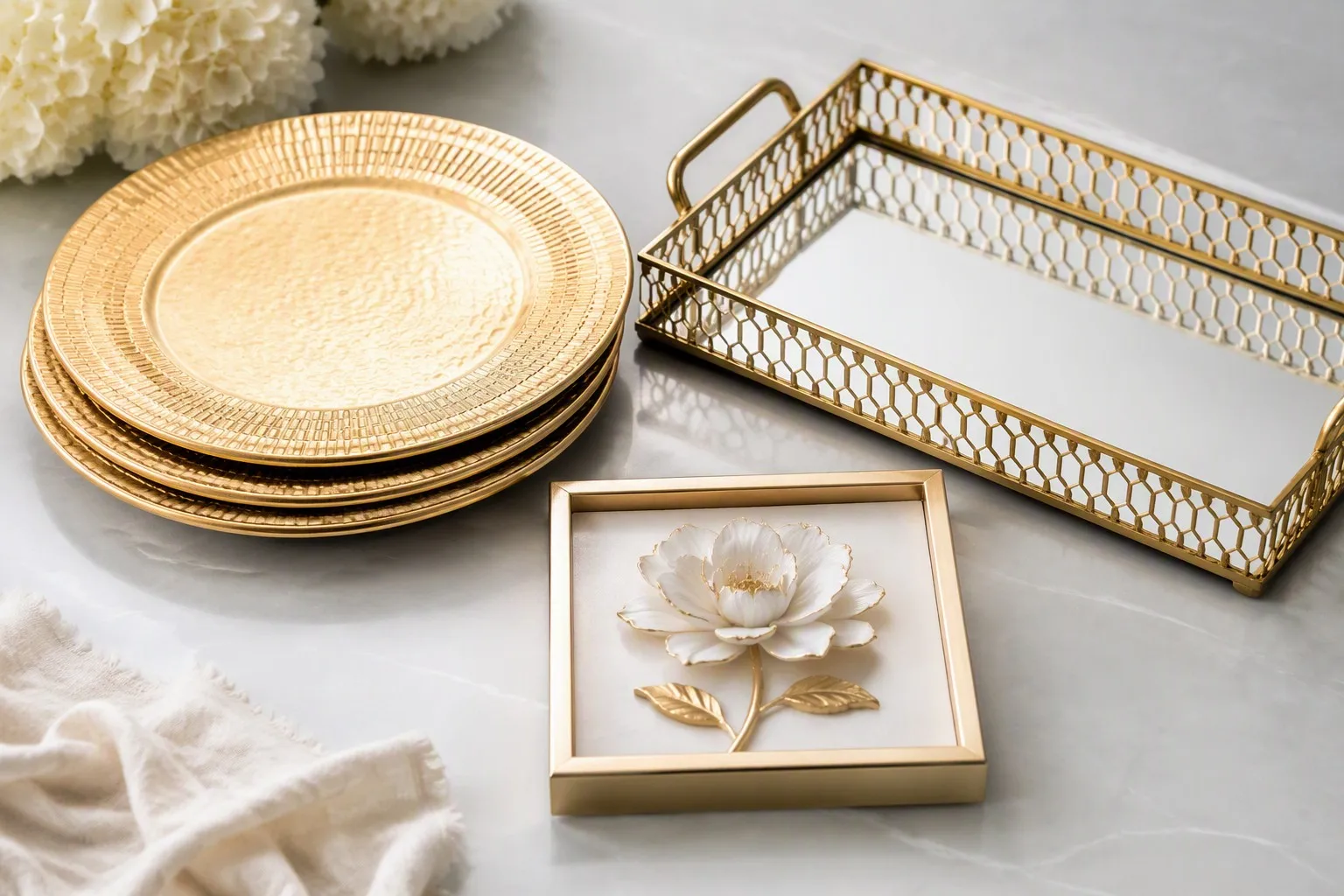
How to List Home Décor Products on Amazon & Your Own Store
You have sourced great home décor products. Now comes the part that actually makes money: listing them well. A weak listing turns a strong product into a slow seller. A strong listing turns an ordinary product into a bestseller.
The rules are different on Amazon and on your own store. Amazon is a search engine with a checkout button. Your own store is a brand experience. Here is how to win on both channels with the same product catalog.
The Foundation: Strong Product Data
Before you list anywhere, gather complete product data. This is the raw material every listing is built from. Missing data forces you to write weak copy later.
Collect these for every product:
- Title. The product name plus the key selling point.
- Description. Features, benefits, and use cases in plain language.
- Images. A clean hero shot plus lifestyle and detail shots.
- Price. Your cost, your target retail, and your margin.
- Variants. Colors, sizes, and any options the product comes in.
Keep all of this in one spreadsheet per product. When you are ready to list, the data is already organized.
Listing on Amazon: Win the Search
Amazon buyers search with keywords, compare quickly, and buy fast. Your listing must match that behavior.
Amazon title best practices:
- Lead with the product type and the main keyword.
- Include color, quantity, and the key use case.
- Stay under Amazon's character limits. Front-load the important words.
Amazon bullet points:
- Five bullets, each one feature plus benefit.
- Put the most important selling point first.
- Use short, scannable sentences. No filler.
Amazon images:
- Main image on pure white background. This is mandatory.
- Add lifestyle shots showing the product in use.
- Add a size or scale reference shot where helpful.
- Do not add text, watermarks, or logos to the main image.
Amazon pricing:
- Price competitively at launch. Then adjust based on conversion.
- Factor in FBA fees, storage, and shipping into your math.
- Home décor has strong seasonal spikes. Price up before peak seasons.
Source: Source products with Amazon-ready quality from our charger plates.
Listing on Your Own Store: Build the Brand
Your own Shopify store is where you control everything. The title, the images, the story, the margin. Use that freedom.
Shopify title best practices:
- Write for humans first, search engines second.
- Keep it under 80 characters.
- Make the value clear in the first few words.
Shopify product description:
- Lead with a headline that states the benefit.
- Follow with three to five benefit-driven bullet points.
- Add a short story about how the product fits the buyer's life.
- End with a clear call to action.
Shopify images:
- Use a consistent style across your whole catalog.
- Hero shot, lifestyle shot, detail shot, and a scale reference.
- Match lighting and background across all products for a cohesive brand.
Shopify pricing:
- Set a compare-at price to show a discount.
- Use psychological price endings that fit your brand.
- Bundle related products to raise average order value.
Amazon FBA vs Your Own Store: A Channel Comparison
| Factor | Amazon | Your Own Store |
|---|---|---|
| Traffic | Built-in, huge | You must earn it |
| Competition | High, price-driven | Controlled by you |
| Brand control | Limited | Full |
| Fees | FBA + referral fees | Lower, but you pay for traffic |
| Margins | Thinner | Thicker |
| Customer data | Amazon keeps it | You own it |
The smart play is usually both. Use Amazon for volume and discovery. Use your own store for brand and margin. The same product can serve both channels with adjusted copy and pricing.
Amazon FBA Support from Your Supplier
If you sell on Amazon FBA, your supplier can make the process far easier. Here is what to ask for.
FBA-ready requirements:
- Private labeling. Get your own brand on the product and packaging. This protects your listing from copycats.
- FBA-compliant packaging. Packaging that meets Amazon's requirements for size, weight, and labeling.
- Barcode-ready. Products that arrive ready to scan and ship. No relabeling work on your end.
- Consistent quality. FBA means you never see the product before your customer does. Quality must be reliable from the factory.
Full OEM and ODM support covers logos, colors, designs, packaging, and private labels. Ask your supplier for Amazon FBA-ready packaging from the start.
Source: Build a private-label catalog with trays and wall décor.
Optimizing Listings After Launch
A listing is never finished. It is a living asset. Review and improve it on a schedule.
Monthly listing checklist:
- Update keywords based on what buyers actually search.
- Refresh images if conversion is low.
- Test new titles if click-through is weak.
- Adjust pricing against competitors.
- Add new FAQs based on customer questions.
- Rotate seasonal keywords before peak seasons.
Small changes compound. A listing that is slightly better every month becomes a top performer over a year.
Conclusion: List Well, Sell More
The product matters. But the listing decides whether it sells. On Amazon, win the search with keyword-rich titles and clean images. On your own store, win the brand with a compelling story and consistent visuals. Do both, and the same catalog works twice as hard.
At MintiHome, we help sellers list with confidence. Our charger plates, trays, and wall décor come FBA-ready with private labeling and consistent quality. With a 1,230+ rating at 5.00 stars, our buyers know the product that arrives matches the listing they built. Contact us on WhatsApp (+86 18575541790) or email alanw@mintihome.com to start your catalog today.
Frequently Asked Questions
Can I use the same product listing copy on Amazon and my own store?
Not exactly. Amazon copy should be keyword-focused and scannable. Your own store copy should be brand-focused and story-driven. Keep the same product facts, but rewrite the title, description, and tone for each channel. Duplicate copy rarely performs well on both.
What is the minimum order quantity to start selling?
Charger plates start at 50 pieces per design. Trays start at 20 pieces per design. Orders cannot be combined across designs to reach the minimum. This is a small enough quantity to test a new listing on Amazon without overcommitting inventory.
How do I get products ready for Amazon FBA?
Ask your supplier for private labeling and FBA-compliant packaging. Full OEM and ODM support covers logos, colors, designs, packaging, and barcode-ready labeling. Consistent factory quality matters most, because FBA means your customer sees the product before you do.
How long does it take to get custom-branded products?
Start with a free digital proof within 12 hours. After you approve it, a physical custom sample takes 3–5 working days. Bulk production then runs 3–7 working days for small rush orders, 5–10 working days standard, or 15–20 working days for orders over 5,000 pieces.
Do I need to order samples before listing?
Yes, always. Samples are free, 1–5 pieces per design. You pay only the shipping cost. If your bulk order later exceeds $2,000, the sample shipping cost is refunded. Testing the actual product lets you write honest, accurate listings with confidence.


